Bounce Your Way to Glory: An Unexpected Take on Store Managemen
-
Okay, so maybe you're expecting an article about optimizing shelf placement and maximizing profit margins in a hyper-realistic retail simulator. And hey, those games can be fun! But today, we're taking a detour. We're going to talk about how a seemingly simple physics game, Basket Random, can unexpectedly translate into a fascinating, albeit abstract, store management experience.
Now, before you click away thinking I've completely lost it, hear me out! While Basket Random isn't technically a store management game, the core principles of resource management, adaptation, and strategic planning surprisingly resonate within its chaotic gameplay. We'll explore how this works, and hopefully, you'll see the connection too!
The Gameplay: More Than Just Bouncing Balls
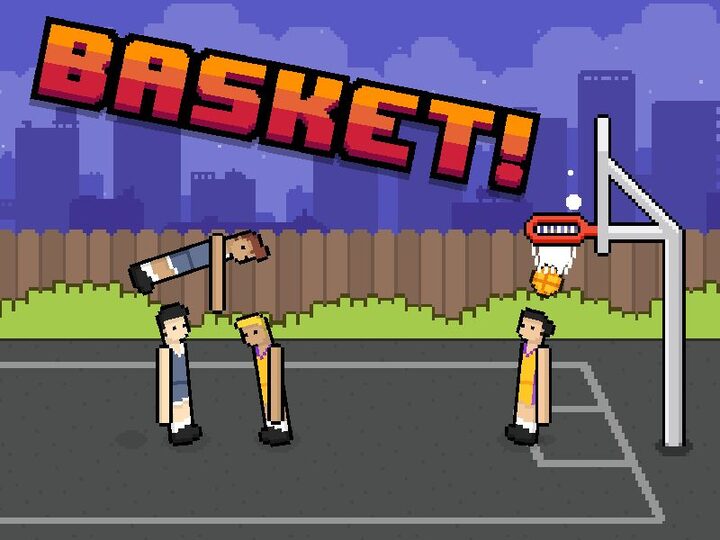
For those unfamiliar, Basket Random is a deceptively simple two-player (or single-player against the AI) game. The premise is straightforward: score more baskets than your opponent. The catch? You control two comically animated players who jump and reach for the ball with a single button. Gravity, momentum, and a healthy dose of randomness dictate everything.
Each round features a new, unpredictable element: different player sizes, bizarre court layouts, varying ball weights, and even weather conditions like snow or rain. These variations are the key to understanding its hidden store management appeal. Think of them as unforeseen market shifts, supplier issues, or unexpected promotional opportunities – challenges you must adapt to in order to "stay in the game."
The core loop involves understanding the current environment, anticipating the ball's trajectory, and timing your jumps perfectly. It's a game of instant decision-making under pressure. Do you go for the risky long shot, or play it safe with a pass to your teammate (who, let's be honest, might just fumble the ball anyway)? Do you prioritize defense, trying to block your opponent, or focus on securing possession?
These questions, while seemingly trivial in the context of a basketball game, mirror the strategic choices you'd face in managing a store.
Basket Random as a Mini Store Management Simulator: Finding the Connection
Where's the store management angle, you ask? Think of it this way:
Resource Allocation (Jumping Ability): Your "jumping ability" is a limited resource. You can't just spam the jump button; you need to time it effectively. This mirrors managing your budget in a store. Do you invest heavily in marketing, or focus on improving your stock levels? In Basket Random, do you use your jump to secure the ball immediately, or conserve it for a crucial block later?
Adapting to Market Changes (Random Variations): The constant changes in court conditions and player sizes represent the fluctuating market conditions you face in store management. Suddenly, your best-selling product (your usual strategy) isn't working? You need to adapt your approach, just like in Basket Random when you're suddenly playing with tiny players on a slippery ice rink. You have to find new strategies to succeed.
Risk Assessment (Taking a Shot): Every shot you take in Basket Random is a risk. Is it a high-percentage shot, or a low-probability gamble? This mirrors the risk assessment involved in introducing a new product or running a promotion. Is the potential reward worth the risk?
Competitive Analysis (Playing Against the AI/Opponent): You're not just playing against the physics of the game; you're playing against an opponent. You need to observe their strategies, identify their weaknesses, and exploit them. This is exactly what you do when analyzing your competitors in the retail world.
Inventory Management (Controlling the Ball): Think of the ball as your most valuable inventory item. Keeping it in your possession (controlling the ball) is crucial to success. Similarly, managing your inventory effectively in a store is vital for maximizing profits and minimizing losses.
Essentially, Basket Random forces you to make quick decisions based on limited information, adapt to changing circumstances, and manage your resources effectively – all skills crucial for successful store management.
Tips for "Store Management" Success in Basket Random:
Observe and Adapt: Pay close attention to the current game conditions. What are the player sizes? What's the court surface like? Adjust your strategy accordingly. A heavy ball on an icy surface requires a different approach than a light ball on a regular court.
Conserve Your Jumps: Don't waste your jumping ability. Time your jumps strategically to maximize their impact. A well-timed block is often more valuable than a desperate jump for the ball.
Practice, Practice, Practice: The more you play, the better you'll understand the game's physics and the nuances of each variation. This knowledge will allow you to make more informed decisions under pressure. Think of it as market research!
Embrace the Chaos: Basket Random is, well, random. Sometimes you'll lose despite playing well. Don't get discouraged! Learn from your mistakes and adjust your strategy for the next round. Resilience is key in both the game and in real-world store management.
Have Fun! At the end of the day, it's a game. Don't take it too seriously. Enjoy the chaos and the unpredictable nature of the gameplay.
Conclusion: A Lighthearted Lesson in Adaptability
While it might seem absurd to compare Basket Random to a store management simulator, the game offers a surprisingly insightful lesson in adaptability, resource management, and strategic decision-making. It's a fun and engaging way to exercise your quick-thinking skills and learn to thrive in unpredictable environments.
So, next time you're looking for a quick and entertaining game to play, give Basket Random a try. You might just find yourself unexpectedly honing your store management skills... one bouncing ball at a time! You might even learn a thing or two about staying agile in a fast-paced, ever-changing "market." Who knew such a simple game could offer such valuable (and hilarious) insights? Happy bouncing!
-